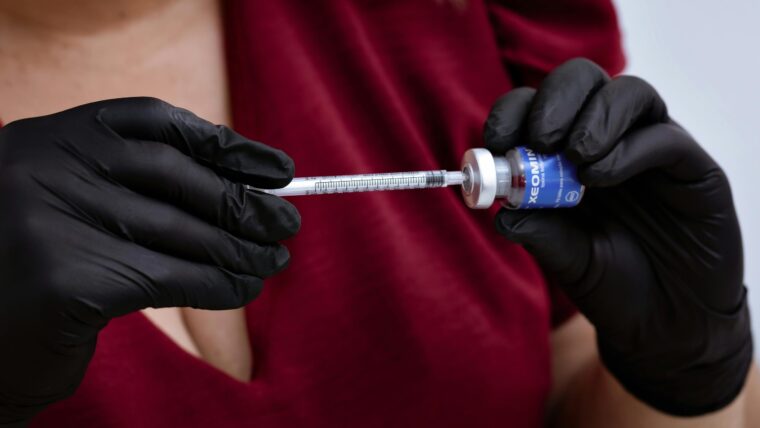
If I were to ask you about your thoughts on Botox you would probably assume I was asking about whether you would get it in your face or to help with TMJ Disorder.
But what if I said it could be a treatment option for your vaginismus? Botox has become a popular treatment option for those suffering from a range of pelvic health problems, including vaginismus and vulvodynia!

But realistically, is it helping or hindering the journey to exploring your pleasure as you move through your vaginismus journey?
Yes, this one-off treatment is intended to help relax your pelvic floor muscles and help make penetration less painful.
But is it the right choice for you?
Before booking an appointment at the nearest clinic, I have compiled a guide to help you in making an informed decision – so you understand the procedure, the benefits, the risks, and what other vaginismus sisters have said about it based on their own experiences.
Why Would You Get Botox in Your Vagina?
Botox has become more popular as a treatment option for those with various medical problems, including TMJ, around the jaw muscles. The treatment refers to the use of Botulinum toxin (Botox) injections into the pelvic floor muscles helps to relax them.
It’s no wonder that the medical field has also started to think about other muscles it could help relax (namely the painful spasms in the vaginal muscles that those affected with vaginismus or vulvodynia have come to know very well).

So, how do they do it, and how successful is it?
How Does Botox Help Vaginismus?
Though I don’t have personal experience with the procedure in my own journey of overcoming vaginismus, I do know is that other Vaginismus Sisters have gotten botox for their pelvic floor muscles with mixed results – some finding it a short and long-term solution and helping relive that physical symptoms of vaginismus, and others stating it was a waste of time and money as well as source of even more pain, sadness and anger.
The actual procedure is supposed to be an easy one, with the use of these tiny needles, 200 units of Botox is administered (roughly a medium-sized dose), split between the three key vagina muscles that can obstruct penetration. The muscle relaxant Botox then partially paralyzes the muscles surrounding the vagina, helping them to relax.

But why has Botox become a popular solution for those with vaginismus? As the Botox treatment seeks to help relax the muscles instead of tightening them, it can be used as a way to help with penetration. Many who have used it state that the effects enabled them to enjoy penetration and use their dilators more easily.
Although many clinics will tell you that 90% of women who have had the treatment have been successful in treating their vaginismus with Botox, the truth is that this percentage doesn’t represent the long-term effects, and those effects will vary. Vaginismus doesn’t come with a one-size-fits-all treatment option. You know that I’m a big proponent of the holistic approach as well and don’t believe there’s a ‘quick fix’ when it comes to claiming one’s sexual freedom!

Many fellow vaginismus sisters benefit from exploring a variety of nervous system, emotional, erotic, and physical tools and practices before they find a combination that ‘works’ for them. And in fact, they themselves are the ones who work towards the deeper self-awareness and personal growth that’s required to put vaginismus in the past.
As for our own community, some fellow vaginismus sisters have managed to move through their journey and meet their intimacy goals with the help of Botox
Others have stated that it offered temporary relief, but when the effect wore off, they found themselves back at square one… Others still found no benefit at all and even regretted Botox, as it either made their symptoms worse or simply was a waste of money.
And the price tag isn’t on the smaller side!
Vaginismus Botox Side Effects: What You Should Know
Like with any surgery, undergoing Botox as a form of vaginismus treatment can come with a few side effects during the recovery period, with temporary side effects including vaginal dryness, bruising, and soreness in the area that can resolve after a few weeks.
When it comes to minimizing the side effects, you are recommended to follow your doctor’s instructions, including staying away from sexual activity (including dilating) for at least three weeks to allow the soreness and swelling to reduce.
I know, with side effects like this, it’s a wonder we aren’t all rushing out to get it done!
There are also certain risks with undergoing the treatment, such as:
- Urinary or fecal incontinence: A temporary side effect that usually resolves on its own
- Vaginal dryness: A mild, temporary side effect that usually resolves within a few weeks

- Constipation and rectal pain: Major side effects that have been reported
- Urinary retention: An extremely rare complication that involves being unable to pass urine for one or two days after the procedure
How Long Does Vaginal Botox Last?
When it comes to choosing to have Botox as part of your vaginismus journey, one of the main questions you probably have is… how long does vaginal botox last? And will it help you overcome vaginismus for good?
Many Botox providers claim that you only need one procedure, with a follow-up after three weeks to make sure there are no complications. And that you can go about using dilatators and enjoying penetrative sex right away.

However, the reality of this is much different. One fellow vaginismus sister shared that she got Botox, and it was a success and has lasted, but the actual day of the surgery was mentally and physically traumatizing.
Another shared that while it worked for a short period, she found that her vaginismus returned and pretty quickly at that.
Surgery For Overcoming Vaginismus: What Are the Options?
We have spoken previously about an alternative surgery that many fellow vaginismus sisters are recommended to undergo as a way to remedy what is assumed to be an underlying physical problem of vaginismus. Yep, I’m referring to a hymenectomy.
When it comes to knowing which option is best for you, surgery vs Botox for vaginismus, it is best to understand why you would get either and what they could help with in terms of your vaginismus journey.

For those who choose to undergo a hymenectomy as a surgery to fix vaginismus, as the name suggests, this is a surgery that is offered when the hymen is still intact, usually because of certain medical issues. After that, they are usually offered dilator therapy.
Botox is less invasive than a hymenectomy, as it only helps to relax the muscles around the vaginal canal and relieve the pain that many feel as the muscles tighten and spasm.
But can either actually lead to long-term awareness and control of the pelvic floor muscles, to relax them at your will?
For some, both of these procedures have brought pain relief, allowed them to use dilators with more ease, and helped them be able to enjoy penetrative sex. I assume that in most cases, this is when Botox is combined with compassionate emotional processing practices like therapy and especially somatic work to support emotional desensitization and retraining of the nervous system.
While Botox can help to relieve many of the physical symptoms, used alone, it overlooks the mental and emotional aspects of the vaginismus experience.
On top of that, having needles up your genitals can naturally feed back into the cycle of pain and intensify any subconscious resistance to penetration, making vaginismus worse in the long term, with potentially an even more intensified bracing response. Any invasive procedure to a body part has a lasting impact – the muscles, tissues, and fascia store a memory of the event and tighten in response to the small ‘t’ trauma..
Having a needle inserted into your vaginal muscles as someone stands between your legs can be an incredibly nerve-racking process and create a negative association with anything coming close to your vulva or vagina, no matter if you are under anesthetic or not! This can deepen the Cycle of Pain and anxiety that is part of what activates the protective body response of vaginismus.

Hence, while the effects of the Botox may be positive in terms of relaxing the muscles, it could cause you to shy away from penetration even more as you associate the act with the procedure.
Overall, no vaginismus solution can or should ignore the need to address the nervous system, psychological, emotional, or erotic components that are part of the journey of overcoming vaginismus. It seems to me that, at least the way Botox is marketed in many cases, attempts to do just that and surpass the ‘real work’ that will help us feel safe, relaxed, and connected to our bodies.
How Effective Is Botox for Vaginismus?
Although the surgery is marketed as safe and recovery is supposed to be painless and easy, how effective is Botox for vaginismus really?
To offer clarity to this question, let’s take a look at the stories of three of our fellow vaginismus sisters who have experienced this procedure firsthand.
One Vaginismus Sister who told me her story stated that Botox (alongside hymen surgery) helped her with her dilator journey, allowing her to get to the fourth in her set! The actual side effects of the Botox were more than she was told, including having it affect her bowels, and once the effects worsened, she was left back at square one in her journey.
In her words, as part of her full story here..
“I had Botox injections and the hymen incision. It allowed me to reach number 4 of the dilator kit, which I can insert comfortably with patience. However, I also had awful side effects… Thankfully, that wore off within a few months. However, I’ve hit a wall again since then; not enjoying the dilating process (I feel I have to be constantly turned on each time to be fully relaxed…)”
On the other hand, another sister’s journey to try Botox was less successful and led to a worsening of her symptoms. She “had pain in my pelvis, lower abdomen, hips, and groin, and even my vulvodynia worsened.”

Finally, we have S, whose journey to overcome vaginismus started with having their hymen removed and Botox after years of pain, shame, and silence.
Although they don’t regret the treatment, they do describe the day of surgery as “physically and mentally traumatising” and felt rushed to start and push through their dilator journey because of the Botox only lasting for six months.
In fact, in their story, they even admit that, along with the physical treatment, you also need to face the mental blockages as well, stating …
“I must note, going down this route was a cop out as I avoided behavioural cognitive therapy at all costs. That would’ve required me to actually face my problem instead of medically getting a procedure and surgery done.”
As you have already gathered, success varies for this procedure, and, rarely, success in the way I define it (to enjoy pleasurable penetrative sex without limitations) is something that can be reached with Botox alone.
To Wrap Up …
Using Botox to treat vaginismus may be an opportunity to make the physical symptoms go away for a while, offering you a chance to regain control over your pelvic muscles temporarily. This can help give you the confidence to start thinking about using dilators or getting ready for penetrative sex.
However, like attending your gynecologist appointment to get your smear test, the idea of someone going near your vulva with a needle can be scary and cause you more discomfort in the long run, and even recreate the cycle of pain as you mentally associate that act with pain and discomfort.

As confirmed by our vaginismus sisters who have gone through the procedure, Botox can offer temporary relief, but I personally don’t recommend it as part of the holistic approach that I deeply believe is necessary when it comes to claiming your sexual freedom. And of course, I invite you to trust your own intuition. And if you’ve already tried Botox and it has worked for you in some way, amazing. If you’ve had it done and were disappointed, perhaps that experience was valuable in understanding your limits and boundaries as you clarify the components of the more wholesome and holistic approach that will take you to the ‘finish line’ of your unique intimacy goals.
The treatment you choose to overcome it is unique to you. My invitation is to intentionally navigate not just with your physical symptoms but also the psychological and emotional aspects of your sexual liberation journey and what it really takes to create an effortless openness in your body in a way that allows your nervous system to feel safe enough to welcome penetration AND deeply enjoy it!
Here’s to reawakening your connection with your pleasure without limitation, in a way that feels right to you!
Do you feel that Botox is going to be part of your path?
– Katrin, with Love